Trent Reznor, the front man and leader behind the Nine Inch Nails, started a new project called “How To Destroy Angels” together with his wife Mariqueen Maandig. The third man is Atticus Ross, who was credited as a producer and programmer for the last four NIN albums.
How To Destroy Angels released a self-titled 6-track EP in June 2010. Like the last two NIN albums it was released under a Creative Commons license and can be downloaded from the website.
The music style is not too different from what Nine Inch Nails were doing the last years. If you like them you’ll probably like HTDA.
Besides the free 320 kbps MP3 version, you can choose to buy a lossless (FLAC/ALAC) version vor $2.00 USD. Included is the music video for “The Space In Between” in 1080p and 480p video quality.
published on September 18, 2010 at 6:12 pm by Alex Due in Scene, tagged with free audio
The film “The Social Network” is about the founding of Facebook and will be released on the October 1, 2010. The director David Fincher also directed the music video of “Only” by Nine Inch Nails in 2005. Therefore it may not be too surprising that Trent Reznor and Atticus Ross of Nine Inch Nails got to write the score.
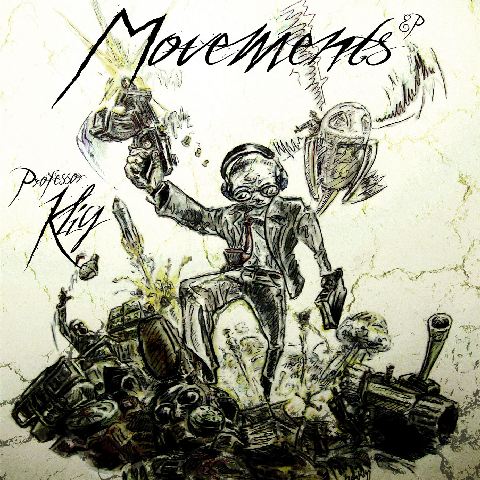
U.S.-based 24 year old Professor Kliq produces music somewhere between Readiohead, Fatboy Slim and The Prodigy. He is currently studying music at the Columbia College in Chicago and describes his style as something between Big-Beat, Ambient and Trip-Hop. All his music is licensed under CC-BY-NC-SA.
You can pre-listen and download all his music from his website.
Listen to my favorite track “Ode To Charles” from the album “Guns Blazin'”:
[audio:https://www.professorkliq.com/music/guns/10.mp3|title=Ode To Charles|artist=Professor Kliq]
Here’s another cool band releasing their music under Creative Commons licenses.
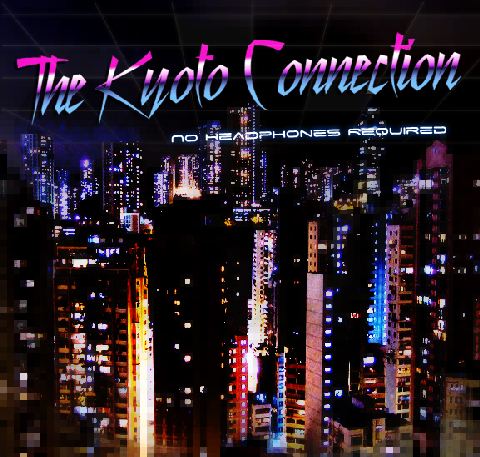
The Kyoto Connection is based in Argentina and released their sixth album “No Headphones Required” in July 2010. It contains eleven songs in 80s style synthpop. Each of their albums is available under CC-BY-NC-ND from the Internet Archive which hosts a lot of CC licensed music. The album is pretty awesome. You should check it out. I really can’t stop listening to it.
Here are my two favorite tracks:
The Kyoto Connection – Glorious Love Song
[audio:https://www.archive.org/download/TheKyotoConnection-noHeadphonesRequired/08GloriousLoveSong.mp3|title=Glorious Love Song|artist=The Kyoto Connection]
The Kyoto Connection – H.E.A.T.
[audio:https://www.archive.org/download/TheKyotoConnection-noHeadphonesRequired/05H.e.a.t.mp3|title=H.E.A.T.|artist=The Kyoto Connection]
All albums can be downloaded from the band’s website.
published on September 3, 2010 at 1:02 am by Alex Due in Scene, tagged with Software
I’ve made all my Creative Commons licensed songs available as FLAC files because I believe that lossless audio is the future and we should start using it as soon as possible. The files are provided through my profile on SoundCloud. Links to the FLAC file of each song are also available on the downloads page.
If you’re not the audiophile kind of guy this might bore for you. Nevertheless, it’s worth thinking about it.
FLAC stands for “Free Lossless Audio Codec” and that’s what it is. It’s a compressed audio format that can be decompressed to the original audio without loosing any bit of quality. Audio formats like MP3 and AAC (M4A) on the other hand do lossy compression. Even if you might think that they sound very good, they don’t sound as good as a CD does. FLAC however sounds exactly like a CD.
The downside is that FLAC files are larger. Lossy compressed audio files are relatively small. Depending on their compression they have 1–2,5 MB per second (128–320 kbit/s). FLAC on the other hand has 4–8 MB per second. That means that it takes 2–3 times as much space as MP3 files. However, they have exactly the same quality as uncompressed WAV files and these have enormous 10 MB per second.
FLAC compresses your audio without any loss of quality. That makes it so cool. Sadly many mobile audio players don’t support FLAC yet. But your computer most likely does.
You should keep in mind that once you use lossy compression and don’t keep the original, the original quality will be gone forever. You’ll always be stuck with the lossy sound. Indeed you could convert MP3 to FLAC. But that would be like scaling a 5 megapixel picture to 10 megapixel. It won’t gain any quality. So you might want to think about starting to use lossless compression today or in the near future. The good thing is that once you use lossless compression you can convert it to any other lossless format without loosing quality, be it Apple Lossless, Real Audio Lossless, or Windows Media Audio Lossless.
And let’s be honest. Current digital audio players have 16 to 64 GB of memory. And they grow continuously. Today’s average hard drive has a size of 1500 GB. That’s 178 days of lossless audio. Who the hell should listen to over 4000 CDs? Your audio player will have the same capacity in about 10 years and probably 300 GB in five years. By then you won’t care about the size. But you won’t get back what you already lost.
The song “Over The Rainbow” was originally written for the movie “The Wizard of Oz” and was sung by Judy Garland. In 1993 the Hawaiian musician Israel Kamakawiwo’ole released an ukulele version of the song on his album “Facing Future”. Since then his interpretation was used in various films and commercials. Israel Kamakawiwo’ole died of weight-related respiratory illness at the age of 38 in 1997.
published on August 21, 2010 at 11:26 pm by Alex Due in Scene, tagged with free audio, netaudio
For those of you who like free music. It’s already several months ago that Fonzerelli released a free track. I like it very much. Fonzerelli is one of my favourite House producers. And I admit, you have to register for his mailing list. But you can unregister afterwards. The track is worth it!